
Understanding Arc Flash Hazards
- Feb 2
- 4 min read
Updated: Mar 9

Understanding arc flash hazards in Canada, they are recognized as a leading cause of catastrophic workplace injuries and industrial property loss. An arc flash event releases intense thermal energy, pressure waves, and toxic metallic vapors within milliseconds, reaching temperatures up to 19,400 degrees Celsius
For Canadian facility managers and owners, managing this risk is a legal and operational mandate. By integrating Arc Flash Hazard Analysis with Electrical Infrared Inspections, organizations move beyond reactive maintenance toward a defensible, data-driven electrical safety program.
The Arc Flash Study: Quantifying Severity under CSA Z462:24
A formal Arc Flash Study is conducted in accordance with the CSA Z462:24 standard (Workplace Electrical Safety) and IEEE 1584 calculation methods. This engineering analysis is designed to protect workers by determining the specific hazards present at each point in a power distribution system.
Core Objectives and 2024 Updates
Incident Energy Analysis: Calculation of the thermal energy (cal/cm) available at a specific working distance (typically 18 inches).
Arc Flash Boundary Determination: Identifying the distance at which unprotected personnel are at risk of second-degree burns (1.2 cal/cm).
Shift from "Categories" to ATPV: Under the 2024 CSA update, the legacy "Category 1-4" system has been replaced with a focus on Arc Thermal Performance Value (ATPV) ratings. PPE selection is now tailored to minimum values of 4, 8, 25, 40, or 75 cal/cm.
5-Year Mandatory Review: Per CSA Z462, arc flash studies must be reviewed for accuracy at least every five years, or whenever major modifications are made to the electrical system.
The Role of Infrared Inspections: Reducing the Likelihood of Occurrence
While the Arc Flash Study dictates safety protocols if a fault occurs, an Infrared Inspection is the primary tool for preventing the fault itself. Canadian insurers and OHS regulators increasingly view routine IR thermography as a critical component of "Condition of Maintenance."
Technical Integration and Benefits
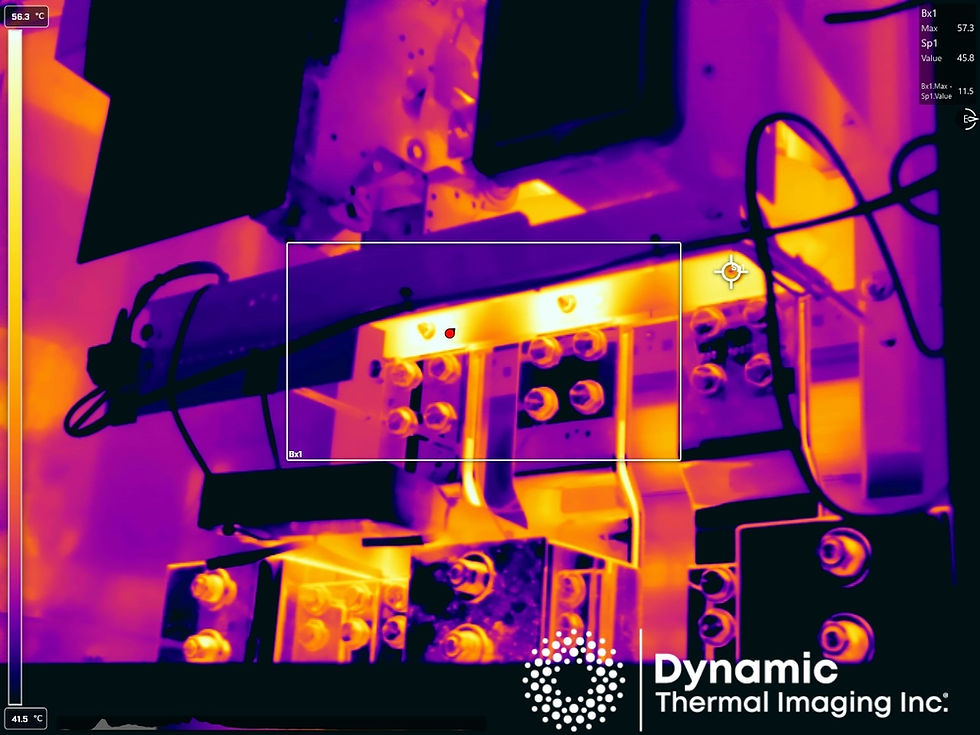
Thermal Anomaly Detection: Certified thermographers use high-resolution infrared imaging to detect high-resistance connections, phase imbalances, and overloaded components. These "hot spots" are often the precursors to an arcing fault.
Maintaining "Safe Working Conditions: CSA Z462 Clause 4.1 emphasizes that safety calculations are only valid if equipment is "properly maintained." Annual IR inspections provide the documented proof of maintenance required by OHS auditors.
Non-Invasive Monitoring: IR inspections are performed under normal load conditions with zero downtime. The use of Infrared Windows allows for data collection without opening energized enclosures, maintaining the "closed-door" safety integrity of the equipment.
Comparison of Safety Disciplines
Feature | Arc Flash Study (CSA Z462 / IEEE 1584) | Infrared Inspection (ASTM E1934) |
Primary Goal | Determine Severity & PPE Requirements | Identify Faults & Reduce Probability |
Standard | CSA Z462:24 (6th Edition) | CSA Z463 (Maintenance Standards) |
Mandatory Update | Every 5 years (minimum) | Recommended Annually by Insurers |
Key Deliverable | Compliance Labels & Single-Line Diagrams | Thermal Exception Reports & Trend Data |
Regulatory Compliance and Insurance in Canada
In Canada, provincial OHS regulators and the Canadian Electrical Code (CEC) Rule 2-306 hold employers responsible for identifying and mitigating electrical hazards. Furthermore, major Canadian insurers view annual infrared scans as a prerequisite for liability coverage and fire prevention.
An effective Canadian electrical safety program requires:
Qualified Professionals: Engineering studies must be performed by Professional Engineers (P.Eng), and IR inspections should be conducted by Certified Level II or III Thermographers.
Audit Trails: Maintaining a documented history of both Arc Flash updates and IR reports to demonstrate due diligence in the event of an incident.
New 2024 Exemptions: The latest standard clarifies exemptions for energized work permits (e.g., normal operation of equipment) provided the equipment is properly maintained, a condition IR studies help verify.
Arc flash hazards represent a significant liability for any Canadian facility. A professional Arc Flash Study provides the necessary safety framework and PPE requirements, while an Infrared inspection ensures the ongoing integrity of the system. Together, these services form a comprehensive strategy for protecting personnel, satisfying insurance requirements, and ensuring uninterrupted operational reliability.
Here are five frequently asked questions (FAQs) tailored for a Canadian industrial audience, reflecting the latest CSA Z462:24 standards and the integration of infrared technology.
FAQs
Is an Arc Flash Study legally mandatory in Canada?
While CSA Z462 is technically a voluntary standard, it is the primary reference used by provincial OHS regulators and the Canadian Electrical Code (Rule 2-306) to define "due diligence." Under the Westray Bill (C-45), employers can face criminal negligence charges if they fail to identify and mitigate known workplace hazards. Consequently, an Arc Flash Study is the recognized method for identifying these hazards.
How often must our Arc Flash Study be updated?
According to CSA Z462 Clause 4.3.5.1, the study must be reviewed for accuracy at least every five years. However, an immediate update is required if there are significant modifications to the system, such as changing a transformer, adjusting protective device settings, or if the local utility changes the available fault current at your service entrance.
What changed regarding PPE in the 2024 CSA Z462 update?
The most significant change is the removal of the "PPE Category" (CAT 1-4) system in favour of Arc Thermal Performance Value (ATPV) ratings. Instead of selecting a "Category 2" suit, workers now select gear based on a minimum arc rating (e.g., 8cal/cm2 or 40cal/cm2). This change provides a more precise match between the calculated hazard and the protective clothing worn.
Can an Infrared Study replace the need for an Arc Flash Study?
No. They serve different functions. An Arc Flash Study is a mathematical model that determines the severity of a potential explosion to set safety boundaries and PPE. An Infrared Study is a physical diagnostic that identifies the likelihood of a failure by finding hot spots. You need the Arc Flash Study for compliance and the Infrared Study for preventive maintenance and risk reduction.
Do we need an energized work permit to conduct Infrared Inspections?
Under CSA Z462, an energized work permit is required for most tasks involving exposed energized parts. However, if your facility has installed Infrared Windows, the inspection is considered "non-invasive" because the enclosure remains closed and guarded. This allows a thermographer to perform the scan without an energized work permit and often with significantly reduced PPE requirements.


Comments